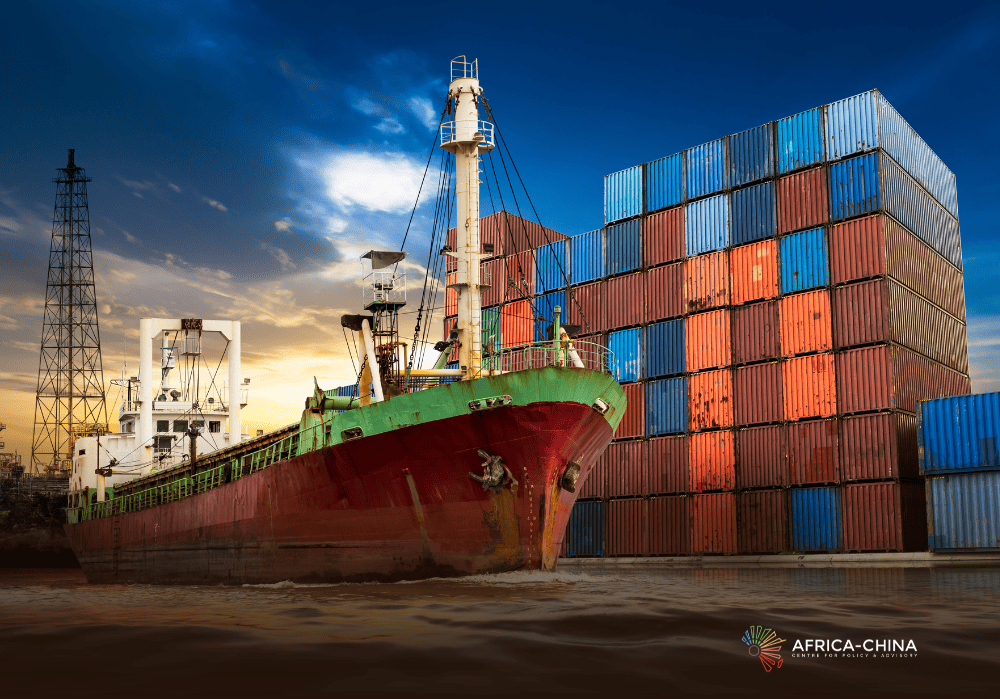
Effective May 1, 2026, China’s decision to grant zero-tariff access on 100% of taxable goods from 53 African countries marks a significant shift in the landscape of global trade relations. Beyond its immediate implications for China–Africa commerce, the policy stands out as one of the most expansive trade openings within contemporary South–South engagement.
At a time when traditional trade arrangements are under strain and protectionist tendencies are resurfacing in parts of the Global North, this move invites closer scrutiny. Is this simply a deepening of existing preferential trade frameworks, or does it signal a more structural rethinking of how developing economies engage one another? China’s zero tariff policy raises a broader question: are we witnessing the emergence of a new model of South–South trade cooperation?
Understanding the Policy: Scope and Intent
At its core, China’s zero-tariff policy extends duty-free access across all product lines for African countries with diplomatic relations, effectively removing import tariffs on 100% of taxable goods. This marks a significant expansion from earlier arrangements that focused primarily on least developed countries and selected product categories.
The policy builds on longstanding China–Africa trade frameworks, deepening market access while reinforcing existing economic ties. It is also situated within a broader architecture of cooperation, where trade facilitation is increasingly linked to industrial development, investment, and capacity-building initiatives. At its core, the policy removes one of the most visible barriers to trade—tariffs—while leaving other structural factors unchanged.
What Defines a “Model” in South–South Cooperation?
In policy terms, a “model” implies more than a singular initiative—it suggests a framework that is replicable, capable of generating mutual benefit, and able to deliver sustained development impact over time. Within the tradition of South–South cooperation, such models are typically grounded in principles of solidarity, non-conditionality, and mutual respect, often distinguishing them from North–South arrangements shaped by stricter policy prescriptions. Yet, not all cooperative initiatives evolve into models; many remain context-specific or limited in scope.
China’s zero-tariff policy must therefore be situated within this broader analytical lens. Does it create conditions that other developing economies can adopt or adapt? Does it generate balanced gains across participating countries, or are benefits asymmetrically distributed? And critically, can it translate preferential access into long-term structural transformation for African economies? To assess whether this is a model, it must be evaluated not only by intent, but by outcomes, structure, and replicability.
What Makes China’s Approach Distinct?
China’s zero-tariff policy stands out for several features that, taken together, differentiate it from many existing trade arrangements. First is its scale. Extending full tariff elimination across virtually all product lines for an entire continent represents an unusually broad application of preferential access, surpassing the more selective coverage seen in many comparable schemes. Second, the policy is largely non-reciprocal. African countries are not required to offer immediate concessions in return, allowing space for domestic industries to adjust and potentially benefit without the pressures of symmetrical liberalization.
A third distinguishing feature lies in how the policy is embedded within a wider ecosystem of economic engagement. Trade access is not presented in isolation but linked to ongoing cooperation in infrastructure development, industrialization, and investment flows—areas that can influence the capacity of African economies to respond to new market opportunities. Finally, the speed and decisiveness of implementation signal a policy approach that prioritizes execution alongside intent. What distinguishes this approach is not only the breadth of access—but its integration with broader economic cooperation.
Opportunities: What This Could Mean for Africa
China’s zero tariff policy presents a range of potential opportunities for African economies, particularly in expanding export volumes and diversifying product offerings. By removing tariff barriers, African producers can compete more effectively in one of the world’s largest consumer markets, opening pathways beyond traditional commodity exports. This could incentivize a gradual shift toward higher-value and processed goods, especially in sectors such as agro-processing, textiles, and light manufacturing.
The policy also creates a possible entry point into global value chains, where African firms can integrate into production networks linked to Chinese industries. If supported by adequate investment, standards compliance, and logistics improvements, this access could reinforce broader industrialization strategies across the continent. However, these outcomes are not automatic. They depend on how effectively governments, institutions, and businesses respond to the opportunity. For African economies, the policy creates a platform—how it is used will determine its impact.
Constraints and Realities: The Missing Middle
While the removal of tariffs is significant, it does not automatically translate into increased exports. Market access, in itself, does not guarantee competitiveness. Many African exporters continue to face structural constraints that limit their ability to take full advantage of such opportunities. These include challenges related to meeting technical standards and certification requirements, high logistics and transport costs, limited access to trade finance, and gaps in production capacity.
In addition, the benefits of the policy are unlikely to be evenly distributed. Countries with more developed export ecosystems and stronger institutional support may be better positioned to respond quickly, while others risk lagging behind. Sectoral disparities may also emerge, with certain industries gaining traction while others remain excluded. As with many trade initiatives, the gap between access and actual trade flows remains a critical consideration.
The Role of China, Africa, and Partners in Shaping the Model
The extent to which China’s zero tariff policy evolves into a broader model will depend on how different stakeholders respond and coordinate their efforts. For African countries, the priority lies in strengthening export readiness through targeted industrial policies, improved institutional capacity, and support for businesses to meet international standards. Without this foundation, market access alone may yield limited results.
China’s role will be equally important in complementing tariff liberalization with practical measures—expanding capacity-building initiatives, facilitating trade logistics, and aligning investment with sectors that enhance productive capacity in African economies. This integration can help bridge the gap between opportunity and execution.
Development partners also have a critical role to play, particularly in financing export readiness, providing technical assistance, and mitigating risks for businesses entering new markets. Institutions such as the African Development Bank can be instrumental in mobilizing resources and coordinating support. Whether this becomes a model will depend on how all stakeholders engage—not just on the policy itself.
Replicability and Global Implications
Beyond its immediate context, China’s zero tariff policy raises important questions about its applicability in other regions. Could similar approaches be adopted by emerging economies seeking to deepen trade with developing partners? The answer depends on factors such as economic scale, market capacity, and the ability to integrate trade preferences with broader development cooperation.
At a systemic level, the policy also invites reflection on global trade governance. It suggests that alternative pathways to market access—outside traditional multilateral or North–South arrangements—may continue to evolve. At the same time, its interaction with existing frameworks will shape how it is interpreted and potentially emulated. The broader question is whether this approach can be adapted, scaled, or replicated across other South–South partnerships.
Conclusion
China’s zero tariff policy represents a notable shift in South–South trade dynamics, yet it is too early to define it as a fully established model. Its scale and design suggest meaningful potential, but outcomes will ultimately depend on how effectively it is implemented and utilized. The pathway from market access to sustained export growth is neither automatic nor guaranteed, and will require coordinated action across multiple stakeholders.
At the same time, the policy introduces a practical experiment in rethinking trade relations among developing economies—one that will be closely observed. China’s zero tariff policy may represent the beginning of a new model—but its true significance will be defined by the results it delivers.