
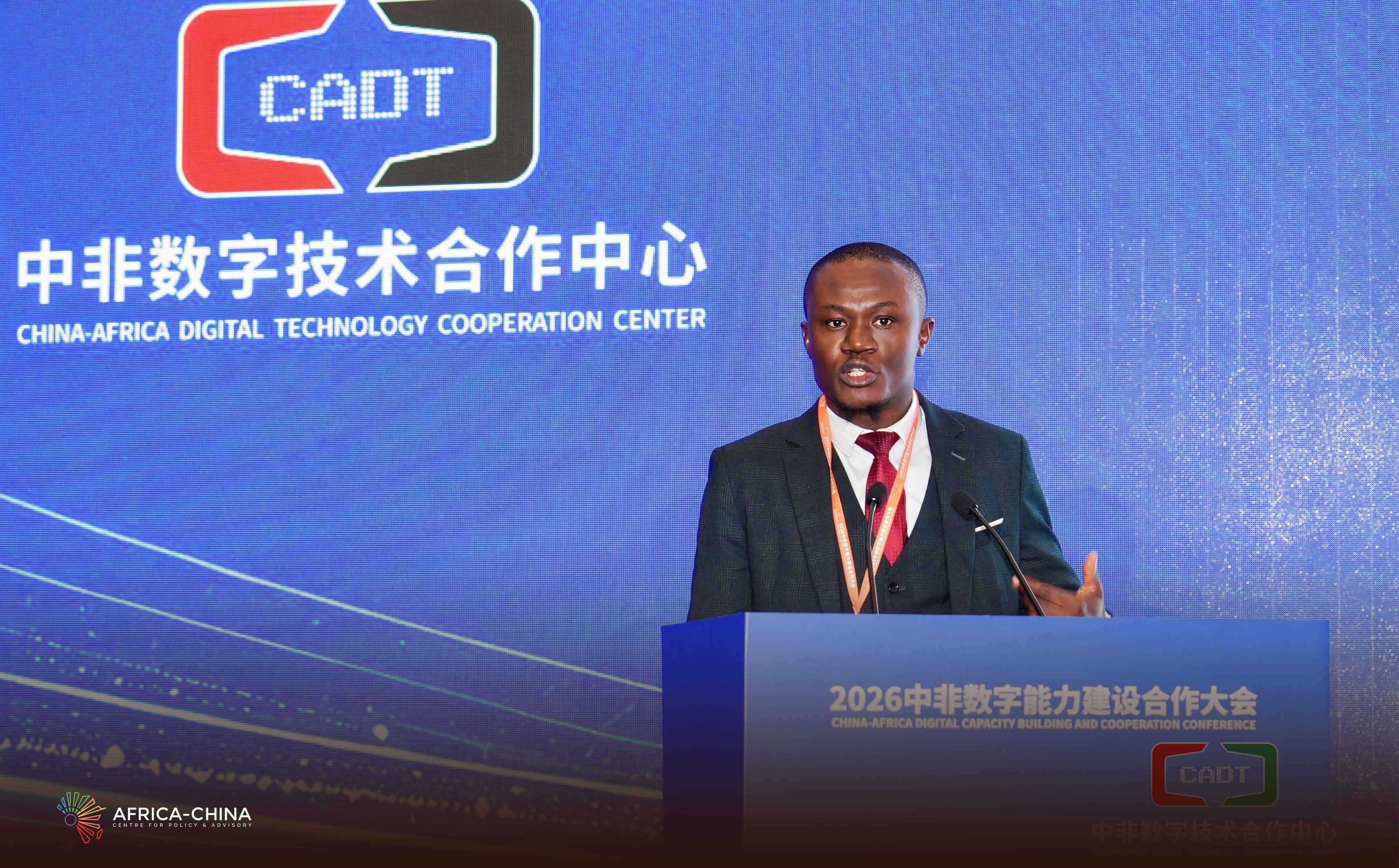
The Executive Director of the Africa-China Centre for Policy & Advisory (ACCPA), Paul Frimpong, has called for a new phase of Africa–China digital cooperation that prioritises African technological capabilities, joint innovation and co-creation over the mere adoption of digital technologies.
Speaking at the 2026 China-Africa Digital Capacity Building Cooperation Conference in Hangzhou, China, which attracted over 300 participants, Frimpong argued that Africa’s digital transformation must increasingly be measured by its contribution to economic productivity, industrial competitiveness and improved livelihoods.
Delivering a presentation titled “From Digital Cooperation to Digital Transformation: Building Africa’s Capacity for the Next Phase of China–Africa Partnership,” he acknowledged China’s important contributions to Africa’s telecommunications infrastructure, connectivity, digital services and wider technology ecosystem.
However, he emphasised that the next phase of cooperation must build on these foundations by strengthening Africa’s capacity to develop, manage, adapt and innovate with emerging technologies.
“Infrastructure connects economies. Capability enables them to transform,” Frimpong stated.
He observed that although Africa has made considerable progress in mobile connectivity, digital payments and e-commerce, the integration of these technologies into productive sectors, including agriculture, manufacturing, mining and trade, remains uneven.
To address this challenge, Frimpong proposed what he described as the four capacities of Africa’s digital transformation: human capacity, institutional capacity, productive capacity and innovation capacity.
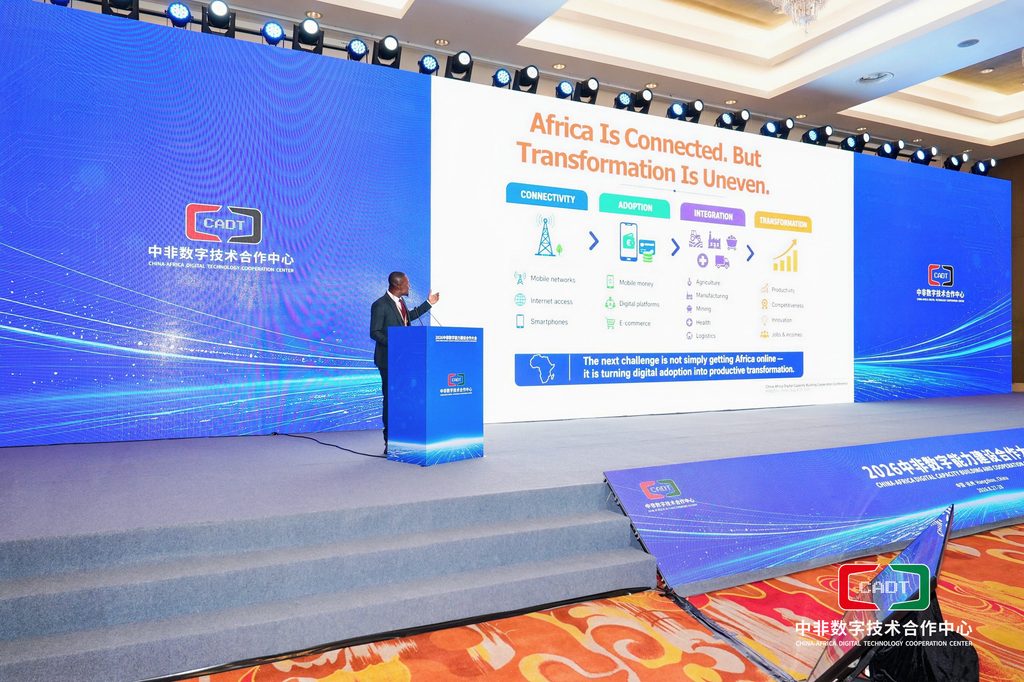
IMAGE: Paul Frimpong, Executive Director of ACCPA, delivering his presentation at the 2026 China-Africa Digital Capacity Building Cooperation Conference in Hangzhou, China.
He explained that these interconnected pillars would enable African countries to develop skilled digital workforces, strengthen policy and regulatory institutions, improve business competitiveness and support locally driven technological innovation.
A central argument of his address was the need to reposition Africa from being primarily a consumer of digital technologies to becoming an active partner in their development.
Frimpong consequently advocated a gradual transition from technology transfer towards deeper knowledge exchange, from technology adoption towards joint innovation, and from individual cooperation projects towards sustained institutional partnerships.
He highlighted the potential for stronger collaboration among African and Chinese universities, research institutions, technology companies and governments to develop solutions tailored to Africa’s development priorities.
The ACCPA Executive Director also stressed that the success of digital cooperation should ultimately be assessed through tangible economic outcomes, including increased agricultural productivity, more competitive industries, stronger African enterprises and improved public services.
“The next phase of China–Africa digital cooperation should be judged not only by the technologies we deploy, but by the capabilities we build together,” he emphasised.
His participation in the conference reflects ACCPA’s continued engagement in international policy platforms aimed at strengthening Africa–China cooperation and ensuring that African development priorities inform emerging partnerships in technology, innovation and economic transformation.
Concluding his address, Frimpong underscored the importance of African agency in shaping the continent’s technological future.
“Africa will not simply participate in the digital economy. Africa will increasingly help shape it,” he declared.